
" width="39.99999340713401px"><path d="M 40 20 C 40 31.043 31.051 39.995 20.009 40 L 19.793 40 C 18.824 39.99 17.856 39.91 16.898 39.761 C 16.114 39.64 15.337 39.471 14.573 39.256 C 5.953 36.823 0 28.957 0 20 C 0 8.956 8.952 0 20 0 L 20.009 0 C 25.509 -0.005 30.766 2.262 34.537 6.264 C 38.047 9.976 40.002 14.891 40 20 Z" fill="rgb(255, 255, 255)" height="40px" id="angB7RHlX" transform="translate(0 0)" width="39.99999340713401px"/><path d="M 11.074 7.847 L 11.074 8.747 L 8.167 8.747 L 0 1.957 C 0.505 1.27 1.053 0.616 1.642 0 Z M 32.269 1.993 L 24.15 8.743 L 21.169 8.743 L 21.169 7.908 L 30.634 0.034 L 30.659 0.06 C 31.205 0.635 31.715 1.243 32.187 1.879 Z M 11.074 18.842 L 11.074 19.742 L 1.642 27.592 C 1.558 27.508 1.475 27.418 1.397 27.331 C 0.9 26.792 0.434 26.226 0.001 25.635 L 8.168 18.842 Z M 32.27 25.597 C 31.767 26.285 31.221 26.939 30.635 27.557 L 21.169 19.682 L 21.169 18.842 L 24.15 18.842 Z" fill="rgb(200, 16, 46)" height="27.591656068610007px" id="k1prb3Bru" transform="translate(3.878 6.204)" width="32.26999577313762px"/><path d="M 7.345 14.309 L 0 14.309 C 0.417 12.709 1.033 11.167 1.833 9.72 Z M 7.179 24.404 L 1.774 28.899 C 1.002 27.479 0.406 25.969 0 24.404 Z M 14.31 28.631 L 14.31 38.714 C 14.183 38.682 14.06 38.647 13.931 38.612 C 11.31 37.874 8.869 36.607 6.757 34.888 Z M 14.31 0 L 14.31 9.925 L 6.869 3.735 C 9.059 1.98 11.594 0.707 14.31 0 Z M 31.96 3.828 L 24.405 10.091 L 24.405 0.001 L 24.519 0.03 C 27.24 0.756 29.776 2.05 31.96 3.828 Z M 38.715 14.309 L 31.548 14.309 L 36.941 9.822 C 37.712 11.24 38.308 12.747 38.715 14.309 Z M 32.024 34.839 C 29.796 36.666 27.198 37.989 24.409 38.715 L 24.409 28.504 Z M 38.715 24.404 C 38.318 25.931 37.74 27.406 36.994 28.797 L 31.715 24.404 Z" fill="rgb(1, 33, 105)" height="38.71498931337368px" id="t6UOWGmpm" transform="translate(0.642 0.643)" width="38.71499112469303px"/><path d="M 40 19.791 L 40 20.19 C 39.991 21.123 39.918 22.053 39.781 22.976 L 22.976 22.976 L 22.976 39.78 C 22.059 39.917 21.134 39.99 20.207 40 L 19.791 40 C 18.864 39.99 17.939 39.917 17.022 39.779 L 17.022 22.976 L 0.22 22.976 C 0.083 22.058 0.01 21.132 0 20.204 L 0 19.81 C 0.009 18.877 0.082 17.946 0.219 17.023 L 17.024 17.023 L 17.024 0.22 C 17.897 0.09 18.777 0.016 19.659 0 L 20.304 0 C 21.146 0.012 21.986 0.077 22.82 0.195 L 22.976 0.218 L 22.976 17.023 L 39.78 17.023 C 39.917 17.94 39.99 18.864 40 19.791 Z" fill="rgb(200, 16, 46)" height="39.99999200856931px" id="RUCh8T6zE" transform="translate(0 0)" width="39.99999200856931px"/></g></g></svg>)
" height="40px" id="Q_odDPqUH" width="40px"/><path d="M 20.87 6.957 L 13.913 6.957 L 13.913 0 L 6.956 0 L 6.956 6.957 L 0 6.957 L 0 13.913 L 6.956 13.913 L 6.956 20.87 L 13.913 20.87 L 13.913 13.913 L 20.87 13.913 Z" fill="rgb(240, 240, 240)" height="20.86953125000001px" id="Bjm8exMq6" transform="translate(9.57 9.57)" width="20.869531249999994px"/></g></svg>)
GBP/CHF Calculator
Compare the exchange rates for the Great British Pound (GBP) and Swiss franc (CHF).
GBP/CHF Calculator
Compare the exchange rates for the Great British Pound (GBP) and Swiss franc (CHF).
GBP/CHF Calculator
Compare the exchange rates for the Great British Pound (GBP) and Swiss franc (CHF).
Convert GBP to CHF
Find competitive exchange rates for GBP/CHF and CHF/GBP with SwissFx. Use our calculator below.
Convert GBP to CHF
Find competitive exchange rates for GBP/CHF and CHF/GBP with SwissFx. Use our calculator below.
Convert GBP to CHF
Find competitive exchange rates for GBP/CHF and CHF/GBP with SwissFx. Use our calculator below.
*Currency rates used are indicative based on the mid-market rate with example spreads used to demonstrate the difference between an average for Swiss banks vs one typically offered by SwissFx.
This is for informational purposes only and you may get a different rate when exchanging money.
Please contact us for an exact price.
GBP/CHF Currency History
See the historical trend for GBP/CHF in our chart below.
Toggle the view between the last 7 days, 1 month, 3 months, 1 year and 5 years.
Important historical events affecting the GBP/CHF exchange rates:
The GBP/CHF exchange rate reflects developments in the UK economy and monetary policy, as well as demand for the Swiss franc during periods of uncertainty.
Did you know? The pound sterling is the world’s oldest currency still in continuous use, with a history spanning more than 1,200 years.
Some of the events that have historically affected the GBP/CHF exchange rate include:

World War I & British suspension of the Gold Standard (1914)
Before the First World War, both the British pound and the Swiss franc operated within the international Gold Standard. Their values were linked to gold, which limited fluctuations between the two currencies. When war began in 1914, Britain suspended the Gold Standard, while Switzerland also suspended the convertibility of its currency. Exchange rates were therefore no longer governed by the same fixed gold-parity framework.
Switzerland restored its pre-war parity by the end of 1924. Britain followed in April 1925, returning to gold at the same dollar parity as before the war. However, sterling was overvalued at this rate. Maintaining the parity constrained British monetary policy and placed additional pressure on employment and economic activity.
Image: See page for author, Public domain, via Wikimedia Commons
World War I & British suspension of the Gold Standard (1914)
Before the First World War, both the British pound and the Swiss franc operated within the international Gold Standard. Their values were linked to gold, which limited fluctuations between the two currencies. When war began in 1914, Britain suspended the Gold Standard, while Switzerland also suspended the convertibility of its currency. Exchange rates were therefore no longer governed by the same fixed gold-parity framework.
Switzerland restored its pre-war parity by the end of 1924. Britain followed in April 1925, returning to gold at the same dollar parity as before the war. However, sterling was overvalued at this rate. Maintaining the parity constrained British monetary policy and placed additional pressure on employment and economic activity.
Image: See page for author, Public domain, via Wikimedia Commons

Britain leaves the Gold Standard (1931) and Switzerland devalues the franc (1936)
Confidence in the pound sterling deteriorated during the Great Depression. In September 1931, sustained losses of gold and foreign-exchange reserves, a worsening trade balance and short-term capital outflows led the United Kingdom to leave the Gold Standard. Sterling was then allowed to float and depreciated sharply.
Switzerland remained within the standard, and the Swiss franc appreciated substantially between 1931 and 1936, particularly against sterling and the US dollar. This made Swiss exports more expensive and intensified pressure on the country’s export and tourism sectors. Switzerland eventually devalued the franc by approximately 30% on 26 September 1936. The two decisions therefore affected GBP/CHF in opposite directions: Britain’s earlier departure weakened sterling against the franc, while the later Swiss devaluation reduced some of the franc’s previous overvaluation.
Image: Public domain, via Wikimedia Commons
Britain leaves the Gold Standard (1931) and Switzerland devalues the franc (1936)
Confidence in the pound sterling deteriorated during the Great Depression. In September 1931, sustained losses of gold and foreign-exchange reserves, a worsening trade balance and short-term capital outflows led the United Kingdom to leave the Gold Standard. Sterling was then allowed to float and depreciated sharply.
Switzerland remained within the standard, and the Swiss franc appreciated substantially between 1931 and 1936, particularly against sterling and the US dollar. This made Swiss exports more expensive and intensified pressure on the country’s export and tourism sectors. Switzerland eventually devalued the franc by approximately 30% on 26 September 1936. The two decisions therefore affected GBP/CHF in opposite directions: Britain’s earlier departure weakened sterling against the franc, while the later Swiss devaluation reduced some of the franc’s previous overvaluation.
Image: Public domain, via Wikimedia Commons

World War II and the creation of the Bretton Woods system (1939–1944)
The Second World War placed significant pressure on Britain’s external finances. The UK introduced extensive exchange controls under wartime legislation, restricting foreign-exchange transactions and the international use of sterling.
In 1944, the United Kingdom helped establish the Bretton Woods system. Participating currencies were maintained at fixed parities against the US dollar, while the dollar remained convertible into gold for foreign monetary authorities. This marked a decisive shift towards a dollar-centred international monetary system.
Switzerland did not join the International Monetary Fund until 1992. However, the Swiss franc still operated within the wider Bretton Woods fixed-rate environment. The Swiss National Bank intervened in foreign-exchange markets and converted purchased US dollars into gold. GBP/CHF was therefore influenced by official currency parities rather than by a fully floating foreign-exchange market.
Image: See page for author, Public domain, via Wikimedia Commons
World War II and the creation of the Bretton Woods system (1939–1944)
The Second World War placed significant pressure on Britain’s external finances. The UK introduced extensive exchange controls under wartime legislation, restricting foreign-exchange transactions and the international use of sterling.
In 1944, the United Kingdom helped establish the Bretton Woods system. Participating currencies were maintained at fixed parities against the US dollar, while the dollar remained convertible into gold for foreign monetary authorities. This marked a decisive shift towards a dollar-centred international monetary system.
Switzerland did not join the International Monetary Fund until 1992. However, the Swiss franc still operated within the wider Bretton Woods fixed-rate environment. The Swiss National Bank intervened in foreign-exchange markets and converted purchased US dollars into gold. GBP/CHF was therefore influenced by official currency parities rather than by a fully floating foreign-exchange market.
Image: See page for author, Public domain, via Wikimedia Commons

Devaluation of the Pound (1967)
On 18 November 1967, the British government reduced sterling’s official value from USD 2.80 to USD 2.40 per pound, a devaluation of 14.3%. The decision followed recurring balance-of-payments and sterling crises. It made British exports cheaper for overseas buyers but increased the cost of imported goods in sterling.
Because sterling and the Swiss franc still operated within the Bretton Woods fixed-rate environment, the change in sterling’s official parity also reduced its value against the Swiss franc.
Image: Allan Warren, CC BY-SA 3.0, Wikimedia Commons
Devaluation of the Pound (1967)
On 18 November 1967, the British government reduced sterling’s official value from USD 2.80 to USD 2.40 per pound, a devaluation of 14.3%. The decision followed recurring balance-of-payments and sterling crises. It made British exports cheaper for overseas buyers but increased the cost of imported goods in sterling.
Because sterling and the Swiss franc still operated within the Bretton Woods fixed-rate environment, the change in sterling’s official parity also reduced its value against the Swiss franc.
Image: Allan Warren, CC BY-SA 3.0, Wikimedia Commons

The UK’s IMF Crisis (1976)
The British pound had been allowed to float against other currencies on the foreign-exchange market since June 1972, meaning that its value was no longer maintained at a fixed official rate. By 1976, the UK was facing rapid inflation, a rising government deficit and a persistent current-account deficit. This meant that the country was paying more to the rest of the world through trade, income and transfers than it was receiving. Against the wider backdrop of the 1973 oil shock, withdrawals from official sterling holdings and declining confidence placed further pressure on the currency.
Sterling fell by around 12% against a trade-weighted group of currencies between March and June. By the end of November, its depreciation since the beginning of the year had reached approximately 22%. The UK government entered negotiations with the International Monetary Fund for financial support, with stringent policy conditions attached. The broad decline in sterling also placed downward pressure on GBP/CHF.
Image: Marek Slusarczyk, CC BY 3.0, via Wikimedia Commons
The UK’s IMF Crisis (1976)
The British pound had been allowed to float against other currencies on the foreign-exchange market since June 1972, meaning that its value was no longer maintained at a fixed official rate. By 1976, the UK was facing rapid inflation, a rising government deficit and a persistent current-account deficit. This meant that the country was paying more to the rest of the world through trade, income and transfers than it was receiving. Against the wider backdrop of the 1973 oil shock, withdrawals from official sterling holdings and declining confidence placed further pressure on the currency.
Sterling fell by around 12% against a trade-weighted group of currencies between March and June. By the end of November, its depreciation since the beginning of the year had reached approximately 22%. The UK government entered negotiations with the International Monetary Fund for financial support, with stringent policy conditions attached. The broad decline in sterling also placed downward pressure on GBP/CHF.
Image: Marek Slusarczyk, CC BY 3.0, via Wikimedia Commons

The Plaza Accord (1985) and Louvre Accord (1987)
The United Kingdom joined France, West Germany, Japan and the United States in announcing the Plaza Accord on 22 September 1985. The five countries agreed that exchange rates should play a role in correcting international imbalances and considered further controlled appreciation of the main non-dollar currencies desirable. Coordinated sales of US dollars followed the agreement.
The Plaza Accord did not directly target GBP/CHF, and Switzerland was not among its signatories. Its influence on the currency pair was therefore indirect, through wider movements in the dollar and other major currencies.
By early 1987, the dollar had fallen substantially against currencies such as the German mark and Japanese yen. The Louvre Accord, announced on 22 February 1987, stated that exchange rates were now broadly consistent with economic fundamentals and committed the participating countries to cooperate in maintaining greater stability around those levels.
Image: Wikimedia Commons
The Plaza Accord (1985) and Louvre Accord (1987)
The United Kingdom joined France, West Germany, Japan and the United States in announcing the Plaza Accord on 22 September 1985. The five countries agreed that exchange rates should play a role in correcting international imbalances and considered further controlled appreciation of the main non-dollar currencies desirable. Coordinated sales of US dollars followed the agreement.
The Plaza Accord did not directly target GBP/CHF, and Switzerland was not among its signatories. Its influence on the currency pair was therefore indirect, through wider movements in the dollar and other major currencies.
By early 1987, the dollar had fallen substantially against currencies such as the German mark and Japanese yen. The Louvre Accord, announced on 22 February 1987, stated that exchange rates were now broadly consistent with economic fundamentals and committed the participating countries to cooperate in maintaining greater stability around those levels.
Image: Wikimedia Commons

Black Wednesday (1992)
The UK joined the European Exchange Rate Mechanism (ERM) in October 1990. Sterling was required to remain within a 6% band on either side of its agreed central rate against other participating European currencies. By 1992, high German interest rates and the weak UK recovery had made sterling’s ERM rate increasingly difficult to sustain. Heavy speculative selling intensified the pressure on the pound. It reflected wider market concerns that sterling was overvalued at its existing parity, while the interest-rate increases required to defend it conflicted with the needs of the UK economy.
On Wednesday 16 September 1992, currency traders sold sterling heavily, betting that the UK would be unable to maintain its agreed ERM rate. The government announced two interest-rate increases and the Bank of England intervened extensively in the foreign-exchange market by buying pounds. These measures failed to stop the selling pressure, and the government suspended sterling’s membership of the ERM that evening. Sterling then depreciated sharply.
Image: Klip game, CC BY-SA 3.0, via Wikimedia Commons
Black Wednesday (1992)
The UK joined the European Exchange Rate Mechanism (ERM) in October 1990. Sterling was required to remain within a 6% band on either side of its agreed central rate against other participating European currencies. By 1992, high German interest rates and the weak UK recovery had made sterling’s ERM rate increasingly difficult to sustain. Heavy speculative selling intensified the pressure on the pound. It reflected wider market concerns that sterling was overvalued at its existing parity, while the interest-rate increases required to defend it conflicted with the needs of the UK economy.
On Wednesday 16 September 1992, currency traders sold sterling heavily, betting that the UK would be unable to maintain its agreed ERM rate. The government announced two interest-rate increases and the Bank of England intervened extensively in the foreign-exchange market by buying pounds. These measures failed to stop the selling pressure, and the government suspended sterling’s membership of the ERM that evening. Sterling then depreciated sharply.
Image: Klip game, CC BY-SA 3.0, via Wikimedia Commons

Global financial crisis and euro-area debt crisis (2007–2011)
The global financial crisis had a major impact on the United Kingdom. British banks suffered substantial losses, lending contracted sharply and the economy shrank by more than 6% between the first quarter of 2008 and the second quarter of 2009.
Sterling also depreciated significantly. At the end of June 2009, its effective exchange rate was around 20% below its August 2007 level. At the same time, the Swiss franc appreciated as international investors sought safe-haven currencies during the global financial crisis and the subsequent euro-area debt crisis.
As appreciation of the franc intensified, the Swiss National Bank introduced a minimum exchange rate of CHF 1.20 per euro on 6 September 2011 and announced that it was prepared to purchase foreign currency in unlimited quantities to enforce it.
Image: Nigel Chadwick, CC BY-SA 2.0 via Wikimedia Commons
Global financial crisis and euro-area debt crisis (2007–2011)
The global financial crisis had a major impact on the United Kingdom. British banks suffered substantial losses, lending contracted sharply and the economy shrank by more than 6% between the first quarter of 2008 and the second quarter of 2009.
Sterling also depreciated significantly. At the end of June 2009, its effective exchange rate was around 20% below its August 2007 level. At the same time, the Swiss franc appreciated as international investors sought safe-haven currencies during the global financial crisis and the subsequent euro-area debt crisis.
As appreciation of the franc intensified, the Swiss National Bank introduced a minimum exchange rate of CHF 1.20 per euro on 6 September 2011 and announced that it was prepared to purchase foreign currency in unlimited quantities to enforce it.
Image: Nigel Chadwick, CC BY-SA 2.0 via Wikimedia Commons
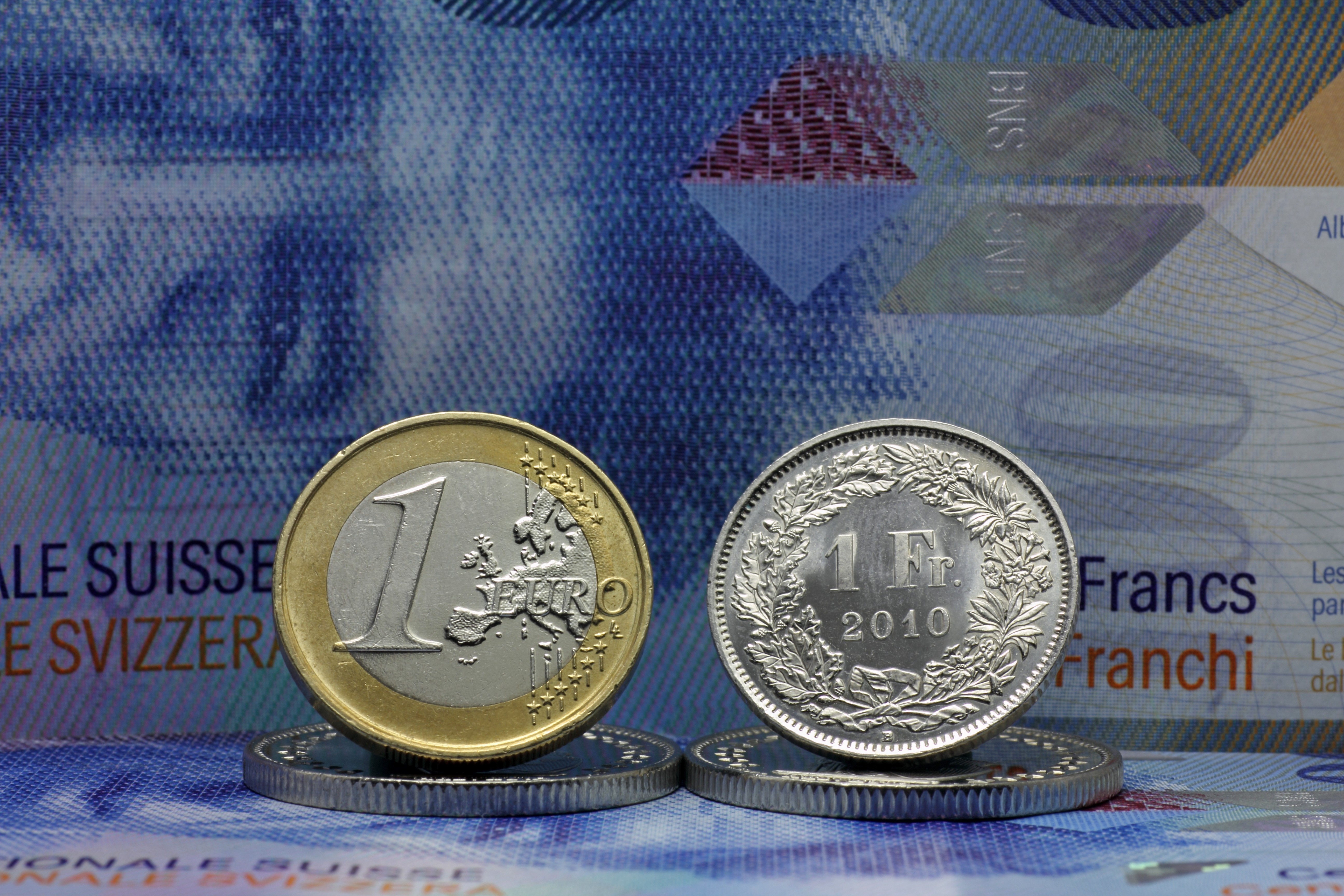
Swiss franc shock (2015)
On 15 January 2015, the Swiss National Bank discontinued its minimum exchange rate of CHF 1.20 per euro and lowered the interest rate on certain sight deposits to –0.75%. The SNB cited growing divergences between the monetary policies of the major currency areas and concluded that maintaining the minimum exchange rate was no longer justified.
The Swiss franc appreciated sharply against sterling.
Swiss franc shock (2015)
On 15 January 2015, the Swiss National Bank discontinued its minimum exchange rate of CHF 1.20 per euro and lowered the interest rate on certain sight deposits to –0.75%. The SNB cited growing divergences between the monetary policies of the major currency areas and concluded that maintaining the minimum exchange rate was no longer justified.
The Swiss franc appreciated sharply against sterling.

Brexit Referendum (2016)
On 23 June 2016, UK voters chose to leave the European Union. The result caused an immediate repricing of sterling as markets reassessed the UK’s future political, trade and economic relationships. The effective value of the pound fell by a further 9.5% between referendum day and the end of July.
The movement against the Swiss franc was also significant. A Swiss National Bank study found that the franc appreciated by 14% against the pound between February and October 2016. The referendum therefore contributed to a sharp decline in the GBP/CHF exchange rate, while uncertainty surrounding the UK’s future relationship with the European Union continued to influence expectations for sterling.
Image: Cabinet Office, OGL 3, Wikimedia Commons
Brexit Referendum (2016)
On 23 June 2016, UK voters chose to leave the European Union. The result caused an immediate repricing of sterling as markets reassessed the UK’s future political, trade and economic relationships. The effective value of the pound fell by a further 9.5% between referendum day and the end of July.
The movement against the Swiss franc was also significant. A Swiss National Bank study found that the franc appreciated by 14% against the pound between February and October 2016. The referendum therefore contributed to a sharp decline in the GBP/CHF exchange rate, while uncertainty surrounding the UK’s future relationship with the European Union continued to influence expectations for sterling.
Image: Cabinet Office, OGL 3, Wikimedia Commons

The COVID-19 pandemic and the UK cost-of-living crisis (2020–2022)
The COVID-19 pandemic caused an unprecedented downturn in the UK economy. Between April and June 2020, during the first national lockdown, UK GDP fell by a record 19.4%. Sterling also depreciated sharply during the initial market disruption, while the Swiss franc came under strong appreciation pressure as investors sought safe-haven currencies. These opposing movements created significant volatility and downward pressure on the GBP/CHF exchange rate.
As economies reopened, disrupted supply chains and a strong catch-up demand contributed to rising inflation. The increase in global energy prices, intensified by Russia’s invasion of Ukraine in 2022, added further pressure. These developments affected inflation and monetary-policy expectations in both the UK and Switzerland and therefore remained relevant to GBP/CHF, although their effect on the currency pair varied over time.
Image: Cabinet Office, OGL 3, via Wikimedia Commons
The COVID-19 pandemic and the UK cost-of-living crisis (2020–2022)
The COVID-19 pandemic caused an unprecedented downturn in the UK economy. Between April and June 2020, during the first national lockdown, UK GDP fell by a record 19.4%. Sterling also depreciated sharply during the initial market disruption, while the Swiss franc came under strong appreciation pressure as investors sought safe-haven currencies. These opposing movements created significant volatility and downward pressure on the GBP/CHF exchange rate.
As economies reopened, disrupted supply chains and a strong catch-up demand contributed to rising inflation. The increase in global energy prices, intensified by Russia’s invasion of Ukraine in 2022, added further pressure. These developments affected inflation and monetary-policy expectations in both the UK and Switzerland and therefore remained relevant to GBP/CHF, although their effect on the currency pair varied over time.
Image: Cabinet Office, OGL 3, via Wikimedia Commons

The UK Growth Plan and market turmoil (2022)
On 23 September 2022, Chancellor Kwasi Kwarteng announced major tax cuts and energy-support measures without an accompanying forecast from the Office for Budget Responsibility. Sterling fell sharply, while UK government bond yields rose.
The Bank of England intervened on 28 September to address risks to financial stability. GBP/CHF fell by around 3.7% between 22 and 26 September. Most of the tax measures were later reversed, Kwarteng was dismissed from his role as Chancellor and Liz Truss, the Prime Minister at the time announced her resignation on 20 October 2022.
Image: Prime Minister's Office, OGL 3, Wikimedia Commons
The UK Growth Plan and market turmoil (2022)
On 23 September 2022, Chancellor Kwasi Kwarteng announced major tax cuts and energy-support measures without an accompanying forecast from the Office for Budget Responsibility. Sterling fell sharply, while UK government bond yields rose.
The Bank of England intervened on 28 September to address risks to financial stability. GBP/CHF fell by around 3.7% between 22 and 26 September. Most of the tax measures were later reversed, Kwarteng was dismissed from his role as Chancellor and Liz Truss, the Prime Minister at the time announced her resignation on 20 October 2022.
Image: Prime Minister's Office, OGL 3, Wikimedia Commons
GBP/CHF Frequently Asked Questions
Get the answers to all of your questions related to exchanging the British pound and Swiss franc.
Which payment systems are used for GBP payments in the UK?
The UK uses several domestic payment systems. Faster Payments supports near-real-time transfers and operates 24 hours a day, 365 days a year. Funds are usually available almost immediately, although some payments can take up to two hours. Individual providers may also set their own transaction limits.
Bacs is commonly used for Direct Debits and Direct Credits, including payroll and other regular business payments. CHAPS is primarily used for high-value or time-critical sterling payments that need to settle on the same business day. The most suitable system depends on the payment type, amount, urgency and provider.
Which payment systems are used for GBP payments in the UK?
The UK uses several domestic payment systems. Faster Payments supports near-real-time transfers and operates 24 hours a day, 365 days a year. Funds are usually available almost immediately, although some payments can take up to two hours. Individual providers may also set their own transaction limits.
Bacs is commonly used for Direct Debits and Direct Credits, including payroll and other regular business payments. CHAPS is primarily used for high-value or time-critical sterling payments that need to settle on the same business day. The most suitable system depends on the payment type, amount, urgency and provider.
Which payment systems are used for GBP payments in the UK?
The UK uses several domestic payment systems. Faster Payments supports near-real-time transfers and operates 24 hours a day, 365 days a year. Funds are usually available almost immediately, although some payments can take up to two hours. Individual providers may also set their own transaction limits.
Bacs is commonly used for Direct Debits and Direct Credits, including payroll and other regular business payments. CHAPS is primarily used for high-value or time-critical sterling payments that need to settle on the same business day. The most suitable system depends on the payment type, amount, urgency and provider.
How do SwissFx GBP/CHF exchange rates compare with those offered by Swiss banks?
Getting started is simple. Fill out our contact form and our team will get in touch to understand your needs and explain how SwissFx works.
How do SwissFx GBP/CHF exchange rates compare with those offered by Swiss banks?
Getting started is simple. Fill out our contact form and our team will get in touch to understand your needs and explain how SwissFx works.
How do SwissFx GBP/CHF exchange rates compare with those offered by Swiss banks?
The total cost of converting GBP and CHF depends on the exchange-rate spread, transaction amount and any additional payment fees. Traditional Swiss banks may apply spreads of 1–3% above the mid-market rate, as well as fixed transaction fees.
SwissFx typically applies tighter spreads. On a CHF 10,000 conversion, the example assumptions used in the calculator can indicate a potential difference of CHF 100–300 compared with an average Swiss bank. This is an indicative comparison rather than a guaranteed saving. Use the calculator above for an estimate based on your amount or request a live quote for the rate available at the time of the transaction.
What influences the exchange rate between the British pound and Swiss franc?
Getting started is simple. Fill out our contact form and our team will get in touch to understand your needs and explain how SwissFx works.
What influences the exchange rate between the British pound and Swiss franc?
Getting started is simple. Fill out our contact form and our team will get in touch to understand your needs and explain how SwissFx works.
What influences the exchange rate between the British pound and Swiss franc?
The GBP/CHF exchange rate reflects demand for both the British pound and the Swiss franc. Expectations about interest-rate decisions by the Bank of England and Swiss National Bank, together with inflation, economic growth and political developments, can influence the pair.
Sterling may react to changes in the outlook for the UK economy, while demand for the Swiss franc can increase during periods of international uncertainty. These factors can pull the exchange rate in different directions, so no single indicator can reliably predict GBP/CHF.
For further information on these factors, read our article “What are the factors affecting exchange rates?”
Do I need to use an international wire transfer to send GBP to the UK?
Getting started is simple. Fill out our contact form and our team will get in touch to understand your needs and explain how SwissFx works.
Do I need to use an international wire transfer to send GBP to the UK?
Getting started is simple. Fill out our contact form and our team will get in touch to understand your needs and explain how SwissFx works.
Do I need to use an international wire transfer to send GBP to the UK?
Not necessarily. If your provider supports local GBP payments, funds can be sent through UK domestic systems instead of international wires, which may simplify costs and timing. The UK remains in SEPA, but SEPA applies to euro payments, so GBP transfers typically use domestic systems like Faster Payments. SwissFx supports both local and international GBP transactions.
Our article “wire transfer vs bank transfer” can give you more information about how this works.
Can I lock in today’s GBP/CHF rate for future payments?
Getting started is simple. Fill out our contact form and our team will get in touch to understand your needs and explain how SwissFx works.
Can I lock in today’s GBP/CHF rate for future payments?
Getting started is simple. Fill out our contact form and our team will get in touch to understand your needs and explain how SwissFx works.
Can I lock in today’s GBP/CHF rate for future payments?
A forward contract lets a business fix a GBP/CHF exchange rate today for a payment or receipt at an agreed future date or during an agreed period. Availability remains subject to eligibility, a credit assessment and the agreed contract terms.
For example, a Swiss importer can fix the CHF cost of a future GBP payment, while a UK company expecting CHF revenue can make its future GBP income more predictable. A forward contract does not guarantee a better rate than the future spot market. Its purpose is to reduce exchange-rate uncertainty.
Can my business receive GBP from UK customers without opening a UK bank account?
Getting started is simple. Fill out our contact form and our team will get in touch to understand your needs and explain how SwissFx works.
Can my business receive GBP from UK customers without opening a UK bank account?
Getting started is simple. Fill out our contact form and our team will get in touch to understand your needs and explain how SwissFx works.
Can my business receive GBP from UK customers without opening a UK bank account?
You may not need to establish a separate banking relationship directly with a UK bank. SwissFx offers local GBP payment and collection capabilities through its multi-currency account, subject to onboarding, eligibility and the account details available to your business.
Local GBP account details may allow UK customers to make domestic sterling payments. Your business can then hold the funds in GBP, convert them into CHF when required or use them for future GBP payments. This may avoid automatic conversion of each incoming payment and reduce reliance on international payment rails.
Please contact us for more information.
Articles about the British pound (GBP)
Explore SwissFx's articles related to the US dollar (USD).

Related Currency Pairs
 CHF/USD
 CHF/EUR
 CHF/AUD
 CHF/CAD
 CHF/JPY
 CHF/PLN
 CHF/SGD
 CHF/HKD
Get a live quote for GBP to CHF
For a real time quote, rather than the example provided by the calculator, please get in touch.
Get a live quote for GBP to CHF
For a real time quote, rather than the example provided by the calculator, please get in touch.
Get a live quote for GBP to CHF
For a real time quote, rather than the example provided by the calculator, please get in touch.